How to Store Nail Polish Properly at Home
Learn how to store nail polish properly at home to extend shelf life, prevent thickening, and keep every bottle looking brand new.
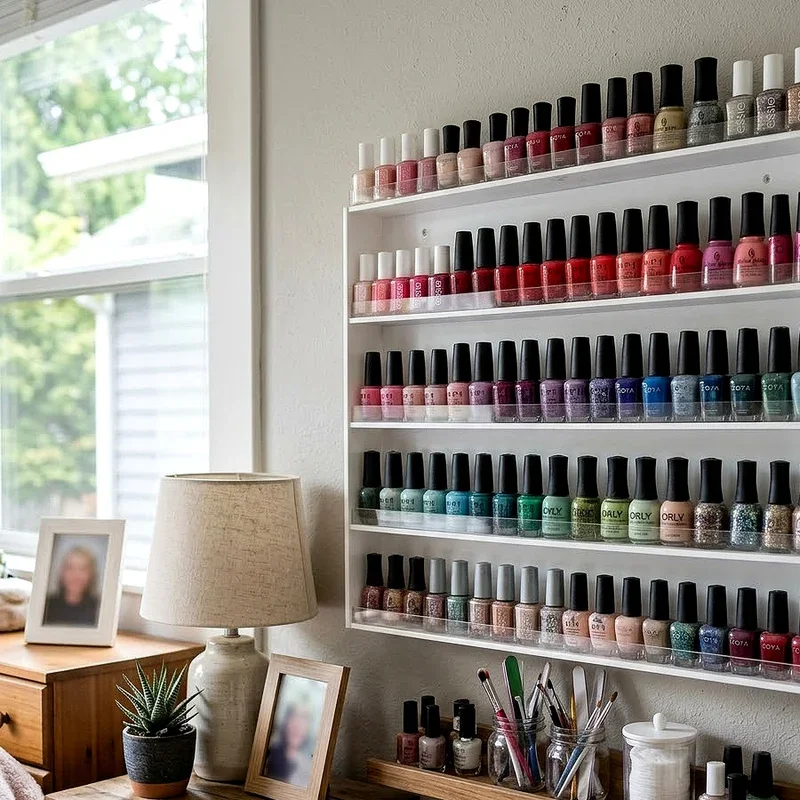
Let's be honest, most of us have a nail polish collection that's grown way beyond what we planned. One bottle turns into ten, ten turns into thirty, and before you know it, you've got an entire drawer dedicated to shades you sometimes forget you own. But here's the kicker, even the priciest, most luxurious polish in your stash can turn into a goopy, separated mess if you're not storing it right. And that, my friend, is such a waste. Knowing how to store nail polish properly at home isn't just about being tidy, it's about protecting your investment, keeping your colors true, and making sure every single bottle is ready to go whenever inspiration strikes.
Why Proper Storage Actually Matters More Than You Think
Oh, you might think it's no big deal where you toss your nail polish after using it, but trust me, location and conditions matter enormously. Nail polish is a chemical product, and like most chemical products, it reacts to its environment. Heat, light, air, and humidity are the four biggest enemies of a good polish, and if you're not keeping them in check, you're basically watching your money evaporate, literally.
When polish is exposed to high temperatures, the solvents inside it start to evaporate faster than they should, which leads to thickening and that dreaded gummy texture. Direct sunlight can cause the pigments to fade or shift, which means that gorgeous coral you bought in the summer might look completely washed out by winter. Even humidity plays a role, because moisture in the air can affect the consistency of the formula over time.
The good news? None of this is hard to fix. Once you understand what your polish needs, it's pretty straightforward to give it exactly that.
How to Store Nail Polish Properly at Home: Temperature is Everything
If there's one rule you take away from this entire guide, let it be this: keep your nail polish at a stable, cool room temperature. Somewhere between 60 and 77 degrees Fahrenheit is the sweet spot. Fluctuating temperatures, like what happens when you store polish near a window or in a bathroom that gets steamy from hot showers, are particularly damaging because they cause the polish to expand and contract repeatedly, which breaks down the formula over time.
Now, a common question people ask is whether storing nail polish in the fridge is a good idea. It sounds reasonable, right? Keep it cool and preserved, like wine. The truth is, it's a bit of a mixed bag. The fridge can keep polish from thickening in hot climates, but the problem is that taking bottles in and out repeatedly creates condensation inside the bottle, which can actually mess with the formula. If you live somewhere with extreme heat and you're dead set on refrigerating your polish, keep a dedicated section for them and minimize how often you're pulling them out.
Keep It Away from Direct Sunlight and Harsh Lighting
You might've noticed that fancy nail polish boutiques keep their displays in cool, dimly lit spaces. That's not just for aesthetic vibes, it's smart preservation strategy. UV rays from sunlight can break down the pigments in your polish and cause the colors to shift or fade over time. Even fluorescent lighting, if it's particularly strong, can have a subtle effect on sensitive shades like pastels and neons.
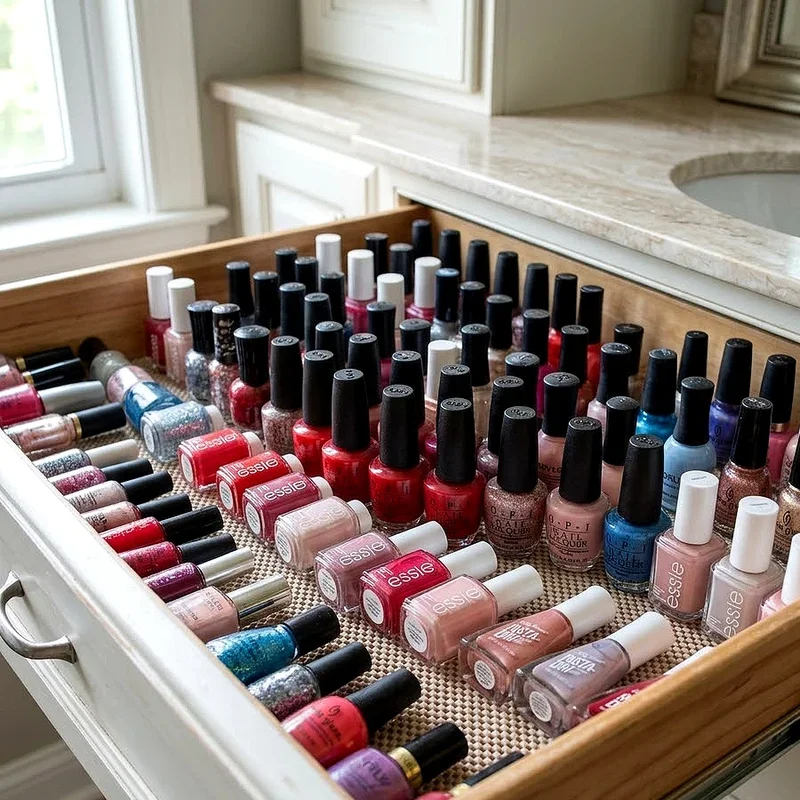
So wherever you decide to set up your polish station, make sure it's away from windows or any spot that gets direct sunlight during the day. A closed drawer, a cabinet with opaque doors, or a dedicated nail polish rack placed in a shaded corner all work beautifully. If you're storing polish in a clear organizer, consider placing it inside a closet or wardrobe to minimize light exposure.
The Right Way to Position Your Bottles
Always, always store nail polish upright. This might seem like such an obvious tip, but you'd be surprised how many people store their bottles on their sides, especially when space is tight. Storing polish on its side allows the formula to sit against the cap for extended periods, which can cause the lid to seal itself shut or, even worse, the polish can begin to dry out and clog the neck of the bottle.
Keeping bottles upright also helps the brush stay properly conditioned and prevents air from getting into the formula unnecessarily. Think of it like storing a fine wine, position matters, and getting it right makes all the difference in what you get when you finally open it up.
Humidity and Air Exposure: The Sneaky Culprits
Bathrooms are the most popular spot people choose to store their nail polish, and honestly, it makes total sense from a convenience standpoint. But here's the thing, bathrooms are actually one of the worst environments for nail polish storage. The constant humidity from showers and baths creates a fluctuating moisture environment that can affect the formula and even cause the caps to loosen over time.
Beyond the bathroom issue, you also want to make sure you're sealing your bottles properly after every use. Even a tiny gap in the cap can allow air to creep in, which speeds up the drying and thickening process. Wipe the neck of the bottle clean before closing it each time, and make sure you're twisting the cap on firmly but not so hard that you strip the threads.
How to Store Nail Polish Properly at Home: Organization Tips That Actually Work
Okay, so now that we've covered the environmental basics, let's talk about the fun part. Organization. Getting your collection sorted not only makes storage more effective, it makes your whole nail routine so much more enjoyable. Here are some practical approaches that work well for different collection sizes:
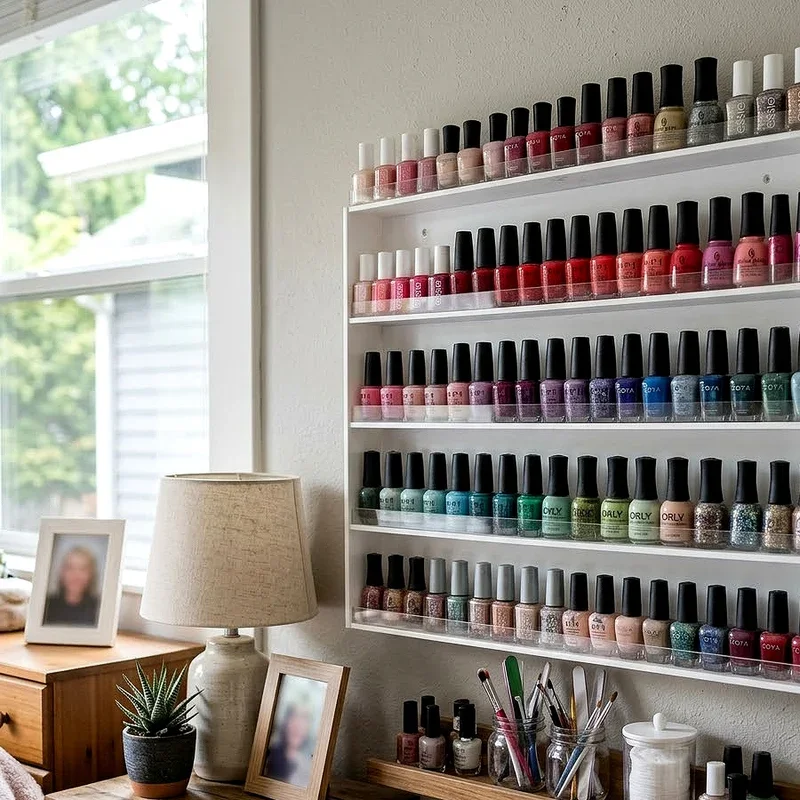
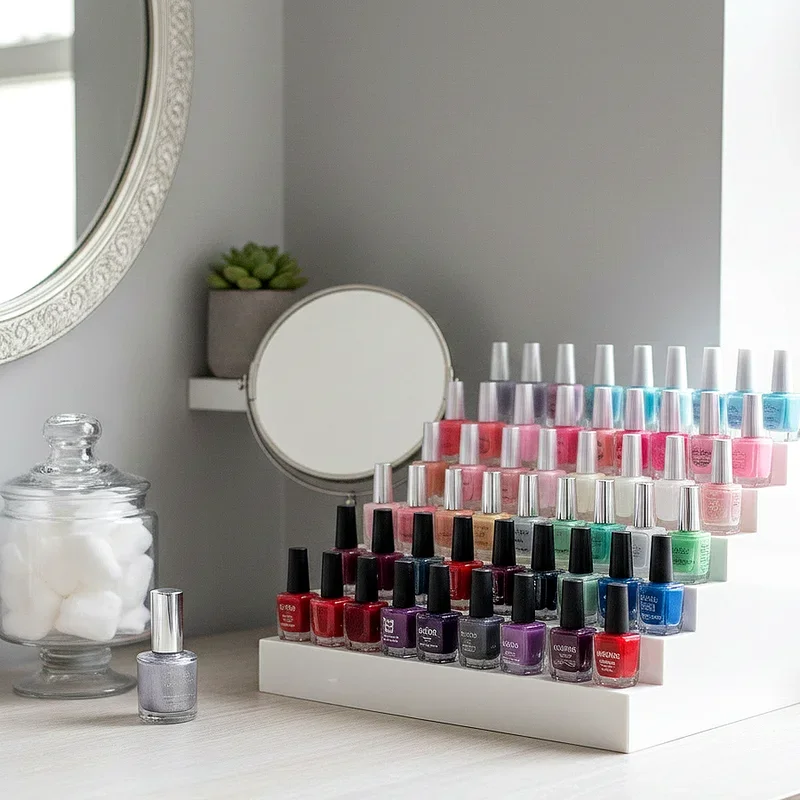
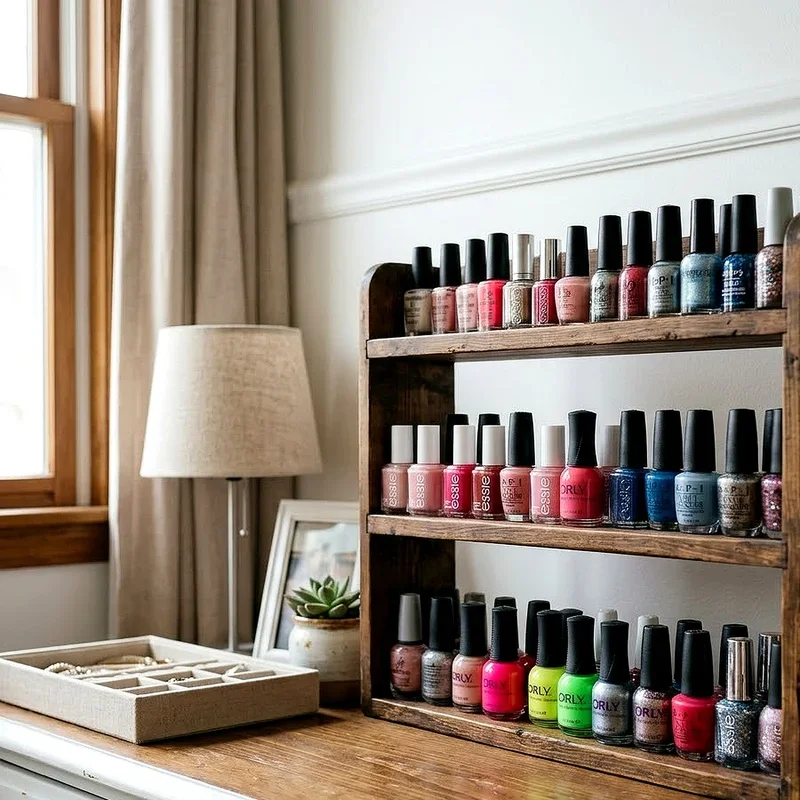
Color-coded racks: Tiered nail polish racks allow you to see all your shades at a glance and keep everything upright. Organize by color family so finding the right shade is a breeze.
Drawer dividers: If you prefer keeping your polish hidden, shallow drawer dividers can be absolute lifesavers. Group by brand or color, and label sections so you always know where to look.
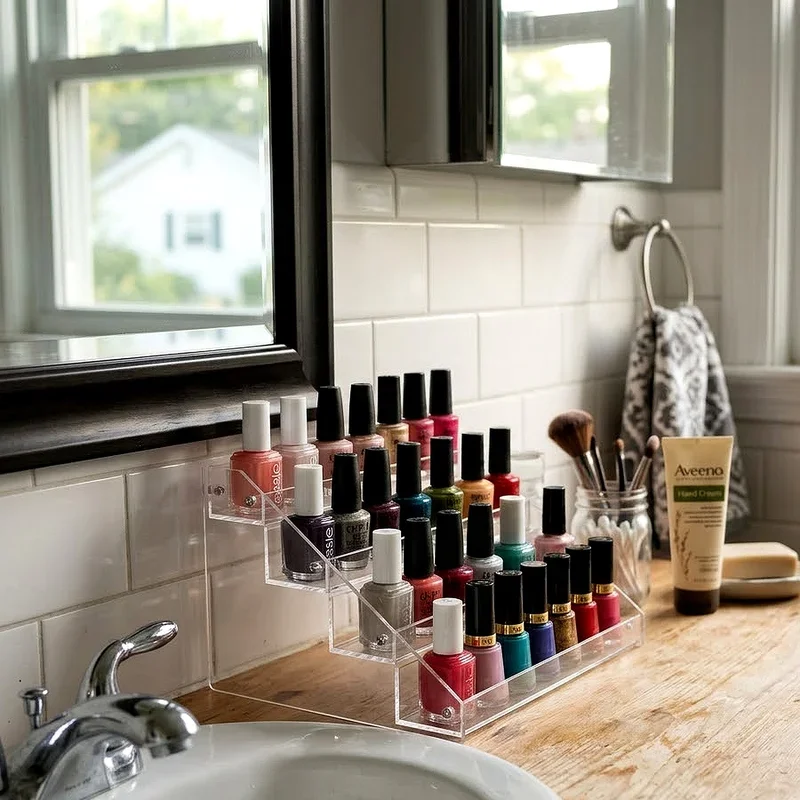
Acrylic organizers: Clear acrylic towers or rotating organizers are incredibly popular for a reason. They keep polish upright, visible, and accessible, just make sure they're placed away from direct light.
Repurposed spice racks: Wall-mounted spice racks are a brilliant and budget-friendly way to display your collection. They keep bottles upright, use vertical space efficiently, and look surprisingly stylish.
Carrying cases and travel bags: For those who want a portable solution, padded nail polish cases protect your bottles and keep them organized on the go.
Whatever system you choose, the key is consistency. Once you've set up your organization method, stick with it. Putting polish back where it belongs after every use keeps things tidy and makes the whole process feel almost effortless.
How to Know When Polish Has Gone Bad
Even with the best storage practices, nail polish doesn't last forever. Most polishes have a shelf life of about two to five years, though this varies quite a bit depending on the brand, formula, and how well you've been looking after them. Here are the telltale signs that a polish has passed its prime:
1. It's become extremely thick or gummy and doesn't thin out properly even with a few drops of polish thinner.
2. The formula has permanently separated and shaking doesn't blend it back together.
3. There's a strange or unusually strong chemical odor that wasn't there before.
4. The color has changed noticeably from what it was when you first opened it.
5. The polish applies streaky and clumpy no matter how many coats you try.
If you're noticing any of these issues, it's time to let that bottle go. No amount of storage improvement is going to bring a truly expired polish back to life, and using a degraded formula can actually result in a worse manicure than you'd expect.
Reviving Thickened Polish: Does It Actually Work?
If your polish has gotten thick but hasn't fully expired, there are a couple of tricks worth trying before you toss it. First, roll the bottle gently between your palms rather than shaking it vigorously. Shaking introduces air bubbles, which can make application bumpy. Rolling helps mix the formula without that issue.
If rolling doesn't cut it, a drop or two of nail polish thinner, not nail polish remover, which is entirely different and will ruin the formula, can help bring the consistency back. Add one drop at a time, roll to mix, and test the consistency before adding more. This can genuinely extend the life of a thickened polish by several months if done carefully.
Some people also swear by placing the sealed bottle in a bowl of warm, not hot, water for a few minutes to loosen up a thick formula. It can work in a pinch, but it's not a long-term fix.
Special Considerations for Gel and Shellac Polishes
Gel polishes deserve a separate mention because their storage needs are a bit different from regular lacquers. Gel formulas are photosensitive, meaning they can begin to cure, or harden, when exposed to UV and even certain fluorescent lights. This makes keeping them away from light sources even more critical than it is for regular polish.
Store gel polishes in their original dark bottles or in an opaque container, and make absolutely sure the caps are sealed tightly after each use. Since gel polishes are typically more expensive, proper storage here isn't just a nice to have, it's essential for protecting your investment. Everything you've learned about how to store nail polish properly at home applies to gels, just with an even greater emphasis on light protection.
Common Storage Mistakes and How to Dodge Them
Even the most well-intentioned nail polish lovers make these mistakes. Here's a quick rundown of what to avoid:
Storing near heat sources: Radiators, sunny windowsills, and even the top of your TV can generate enough heat to damage your polish over time.
Leaving caps loose: Even a tiny amount of air exposure speeds up thickening significantly. Always cap bottles properly after every single use.
Forgetting to clean the neck: Polish residue around the cap area can dry and make opening difficult. A quick wipe with a remover-soaked cotton ball keeps things clean.
Keeping expired bottles out of habit: We all have that shade we feel guilty tossing, but holding onto expired polish just takes up space. If it's gone, let it go.
Overpacking storage containers: Cramming too many bottles into a tight space increases the risk of breakage and makes it hard to see what you've got. Give your collection some breathing room.
Conclusion
Taking care of your nail polish collection really doesn't have to be complicated. By keeping your bottles upright, away from heat and direct light, in a stable environment with proper seals, you're already doing most of the heavy lifting. Knowing how to store nail polish properly at home means your favorite shades stay vibrant, your formulas stay smooth, and your manicures always turn out as intended. A little mindfulness goes a long way, and your collection will absolutely thank you for it in the long run.
Read next: How Long Should You Wait Between Nail Polish Coats
Frequently Asked Questions
Q1. Can you store nail polish in the refrigerator to make it last longer?
A: Yes, but condensation from repeated removal can harm the formula over time.
Q2. How long does nail polish typically last when stored correctly?
A: Most polishes last between two to five years with proper, consistent storage.
Q3. Why does my nail polish get thick and clumpy after a few months?
A: Heat exposure and loose caps allow solvents to evaporate, causing thickening.
Q4. Is it safe to use nail polish thinner to fix a thick formula?
A: Yes, one to two drops of polish thinner can effectively restore the original consistency.
Q5. Do gel polishes need different storage conditions than regular nail polishes?
A: Yes, gel polishes need extra light protection since UV exposure can cause curing.
Stay up to date with our latest ideas!